Trending

Two bowls sit side by side on the counter. Both are pale gold, both smell of vanilla, both started with milk, sugar and egg yolks. One pours in a lazy ribbon that pools on the plate. The other mounds up in soft peaks and holds the mark of the whisk. They look like relatives, but a recipe that asks for one rarely tolerates the other.
That distinction matters more than it sounds. Use custard where pastry cream belongs and your fruit tart slumps off its shell by dessert time. Use pastry cream where custard belongs and you get a gluey puddle instead of a silky sauce. Here's what actually separates them, and how to tell which one your recipe is asking for.
Both are stirred egg custards made on the stovetop. Vanilla custard — crème anglaise in a French kitchen — is a sauce. Pastry cream, or crème pâtissière, is a filling. One is built to be poured, the other to be sliced. Nearly every other difference flows from that single decision.
No starch. Some recipes add a teaspoon of cornstarch as insurance against curdling, but the classic version leans entirely on yolks for body.
Roughly: two cups of milk, four or five yolks, half a cup of sugar, a quarter cup of cornstarch. That's a sturdy, sliceable filling.
Egg yolks set by coagulation. As they heat, their proteins unwind and link together — quickly, and with no mercy. Around 180°F (82°C), those proteins tighten enough to squeeze out water and you have sweet scrambled eggs on your hands. So custard is cooked gently and pulled off the heat the moment it coats the back of a spoon. Aim for 170–180°F, then stop. It firms up a little as it cools, but it never becomes solid. That's sauce territory, not gel.
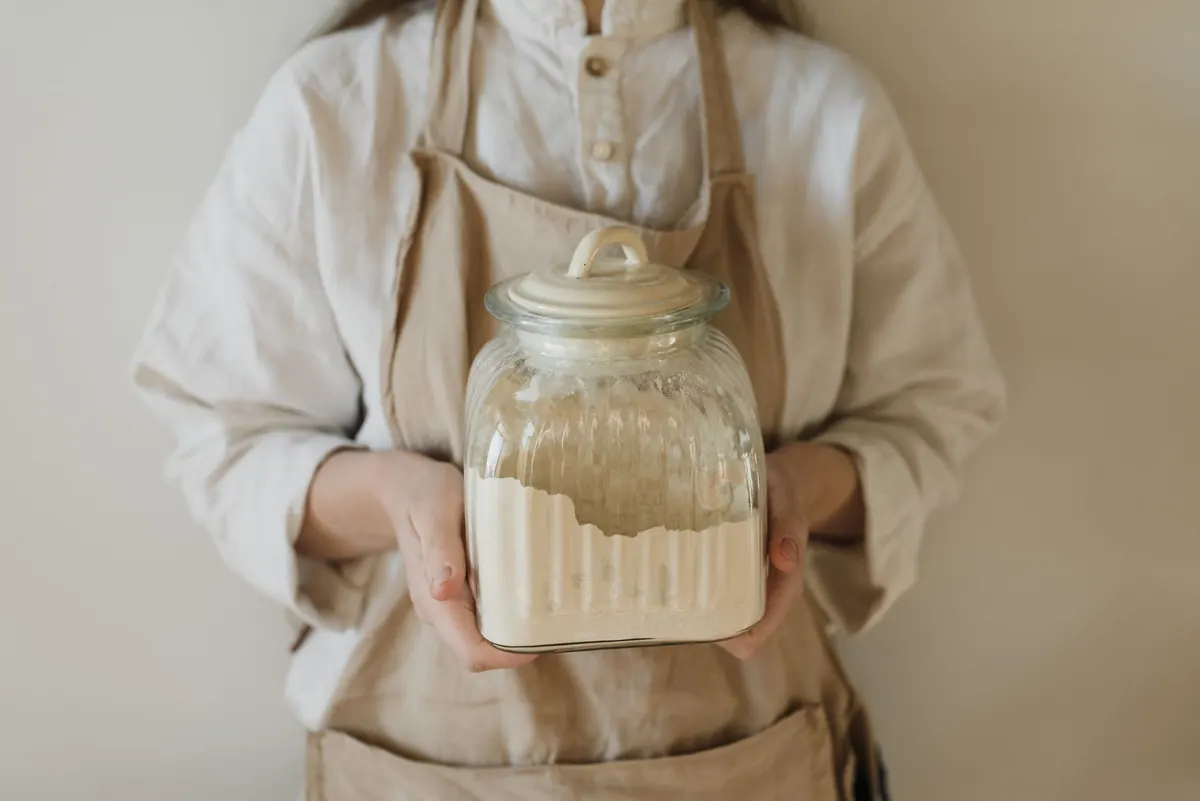
Pastry cream gets starch, and starch behaves differently. The granules absorb liquid and swell, but they need genuine heat to do it — a full rolling boil. That's why pastry cream is boiled for a minute or two while custard is coddled like a nervous houseguest. Cook the starch long enough and it sets the cream into something that holds its shape once chilled.
If you remember one thing: custard thickens from eggs alone; pastry cream thickens from eggs plus starch, and it has to boil.
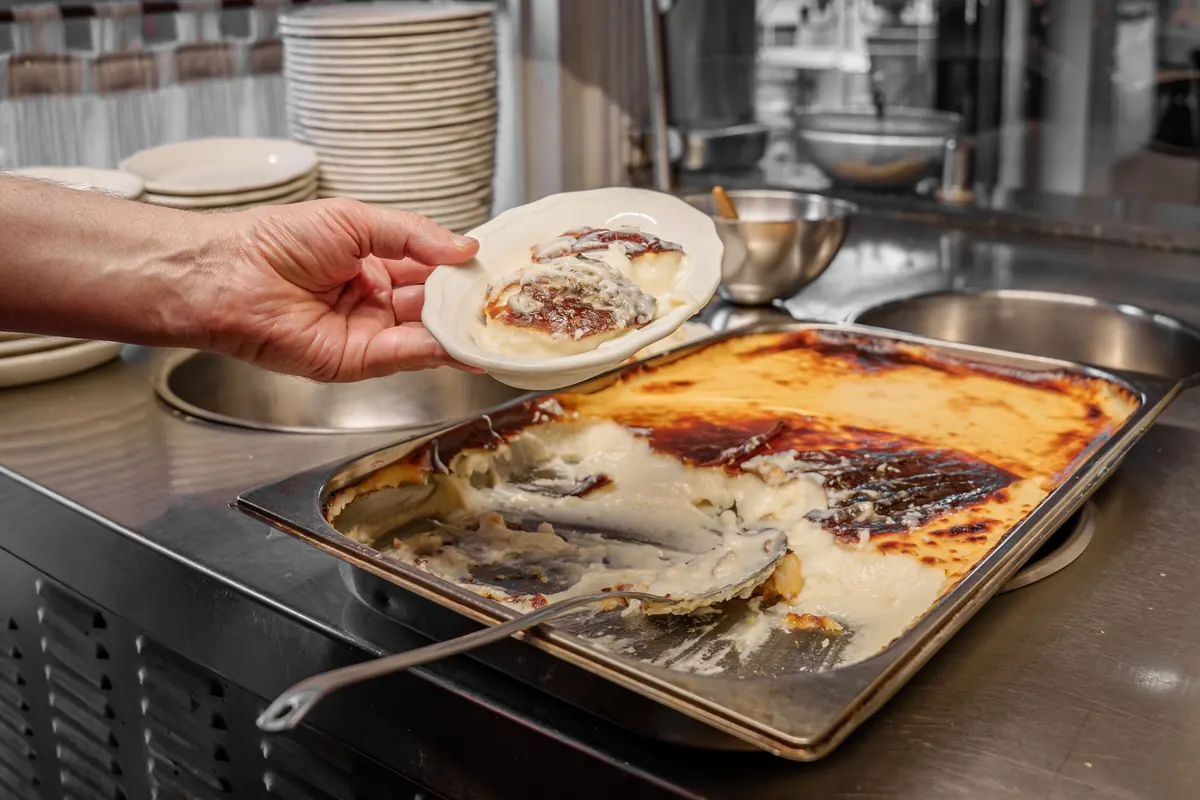
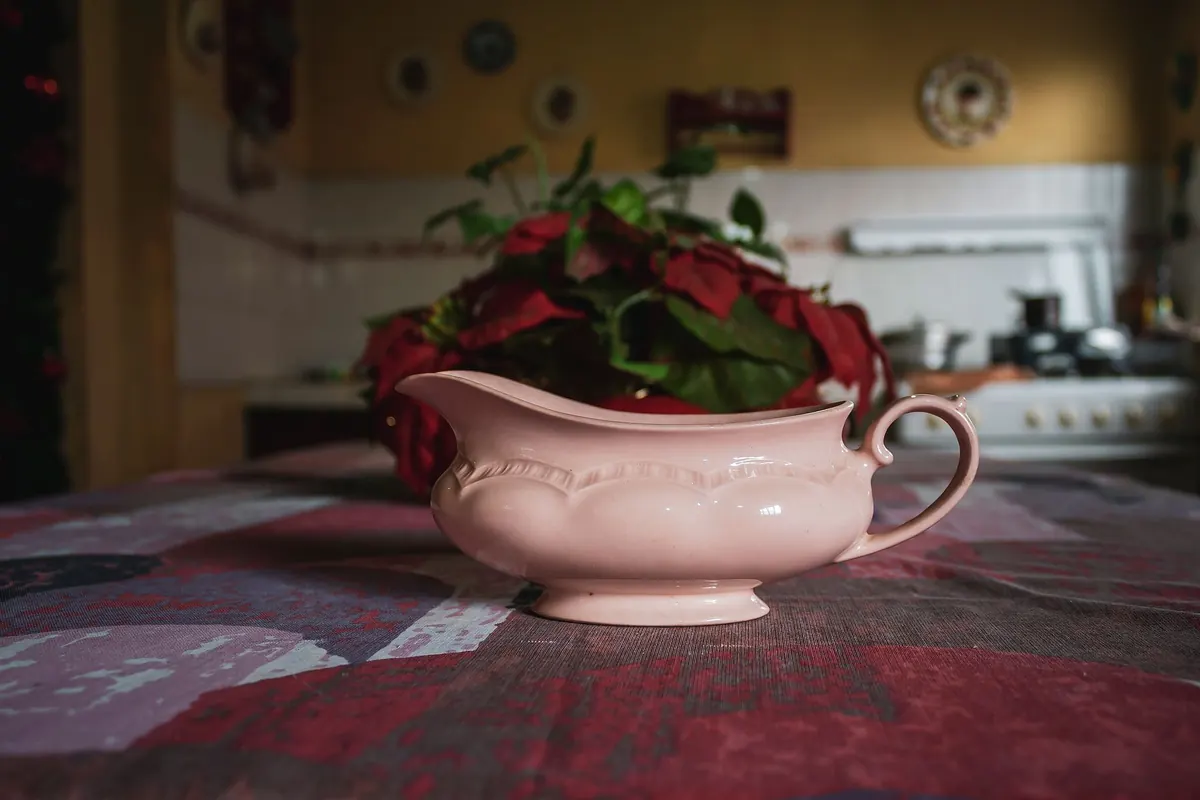
Vanilla custard is pourable and glossy, thin enough to flood a plate and thick enough to cling to a spoon. Warm, it's loose and fragrant. Chilled, it's like heavy cream. Its weak point is a warm room — left out, it thins and can weep liquid.
Pastry cream is dense, spoonable, and firm enough when cold to hold a piped rosette. It slices cleanly in a tart shell. Let it sit out and it softens too, but it starts with far more structure to lose. Whisk it smooth before using — chilled pastry cream stiffens into a slightly grainy block, and thirty seconds of vigorous whisking brings it back.
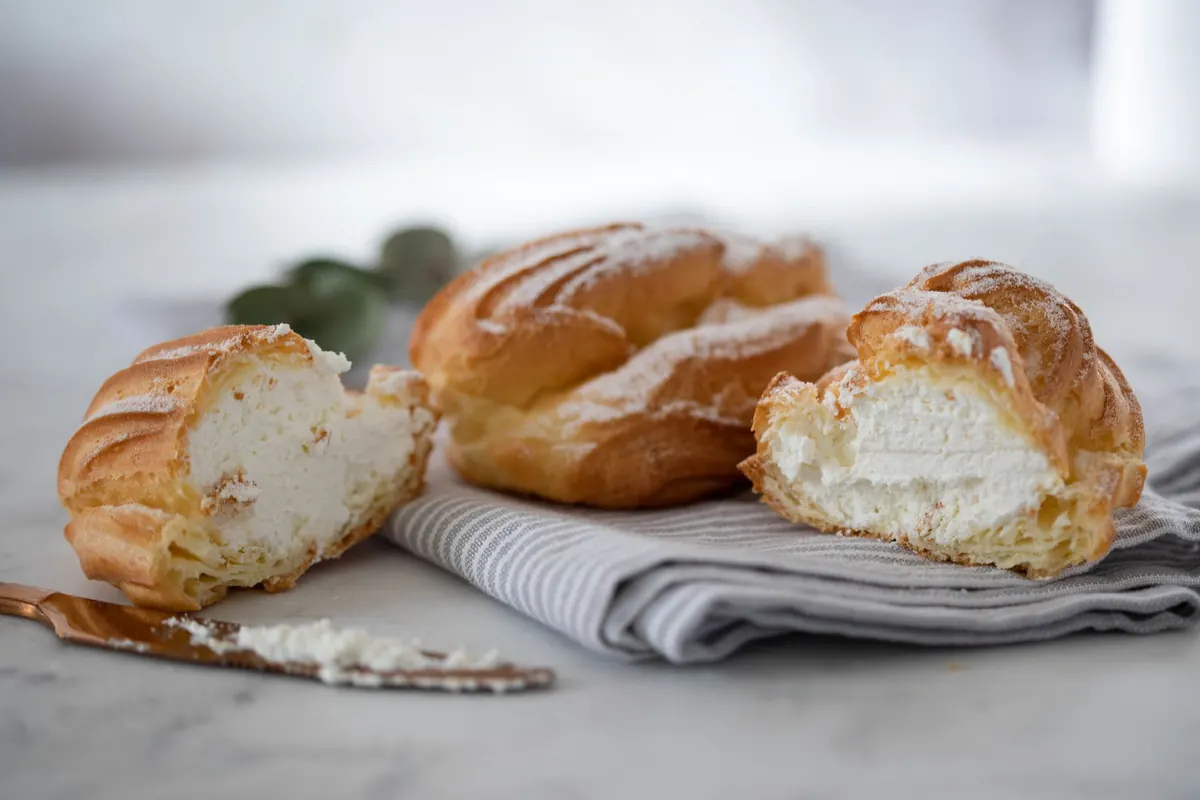
Pastry cream is also the base for two useful variations. Fold in whipped cream and you have crème légère, a lighter filling for fruit tarts. Fold in Italian meringue and you have crème chiboust, which is what sits inside a good Paris-Brest.
Not one-for-one, but there are workarounds. If you only have a custard recipe and need a filling, whisk a tablespoon or two of cornstarch per cup of milk into the sugar before you start, then bring the finished mixture to a brief boil. You've essentially made pastry cream.
Going the other direction, thin chilled pastry cream with warm milk or cream and strain it. It won't be as silky as a true custard because the starch is still there, but it works as a pouring sauce in a pinch. And for a tart on a warm day, don't rely on custard alone — it will run. Add starch, or set it with a little gelatin.
Both contain eggs and milk, so treat them as perishable. Cool them fast — spread in a shallow dish set over an ice bath — cover with plastic pressed to the surface, and refrigerate. Use within three days. Don't leave either at room temperature longer than two hours, or one hour on a hot day. If you're pregnant, immunocompromised, or cooking for someone who is, use pasteurized eggs, and check with a healthcare provider if you're unsure what's right for your situation.
Decide what you want the dessert to do. If it should pour, spoon or pool, make custard. If it should stand, slice or hold a pipe, make pastry cream. Both take about fifteen minutes of active work and share most of the same ingredients, so when a dessert genuinely calls for both — a fruit tart with a jug of custard sauce alongside — make two batches. Your tart will thank you, and so will whoever gets the last spoonful.
Photo: Valeria Boltneva / Pexels